Tunnels
Connecting London and Birmingham
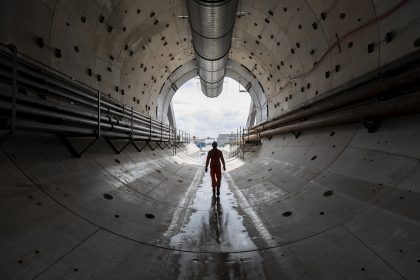
In total, about 65 miles (105km) of tunnels will be built between London and the West Midlands, and 130 million tonnes of earth will be excavated. There are:
- Five twin-bore tunnels
- Five green – or cut-and-cover – tunnels
How we build our tunnels
We use two distinct approaches to building our tunnels, depending on the terrain and depth.
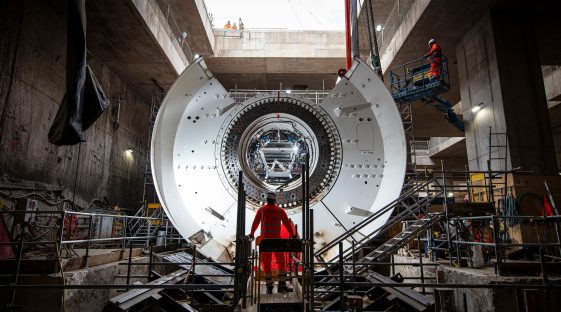
- Deep tunnels – Built with tunnel boring machines (TBMs).
- Shallow tunnels – Built using the cut-and-cover, or green tunnel, method. Tunnels are excavated by digging a channel through the landscape, putting the tunnel structure in the open channel and then covering it with the excavated earth and plants.
Tunnel cross passages
Cross passages are short underground tunnels that connect HS2’s upline and downline tunnels. They are 15-20 metres long and built every 500 metres along the route.
If there’s an emergency in one tunnel, passengers can escape through a cross passage to the other tunnel. This gives people a safe way out and helps rescue teams reach them.
They also make it easier to maintain and operate the tunnels.
How are cross passages built?
Digging the tunnel
- Small remote-controlled machines dig from one main tunnel to the other
- Workers break through to connect the tunnels
Making them waterproof
- Waterproof materials protect the concrete
- This keeps the passages dry and safe to use
Strong construction
- First, sprayed concrete lines the walls
- Then we add reinforced concrete
- Doors are fitted at each end
How and why we're building HS2


HS2 works near you
Sign up for updates about construction in your area. We’ll tell you what we’re building, when we’re working and what we’re doing to reduce disruption.